A timeless voice, a priceless legacy
Own a piece of opera history
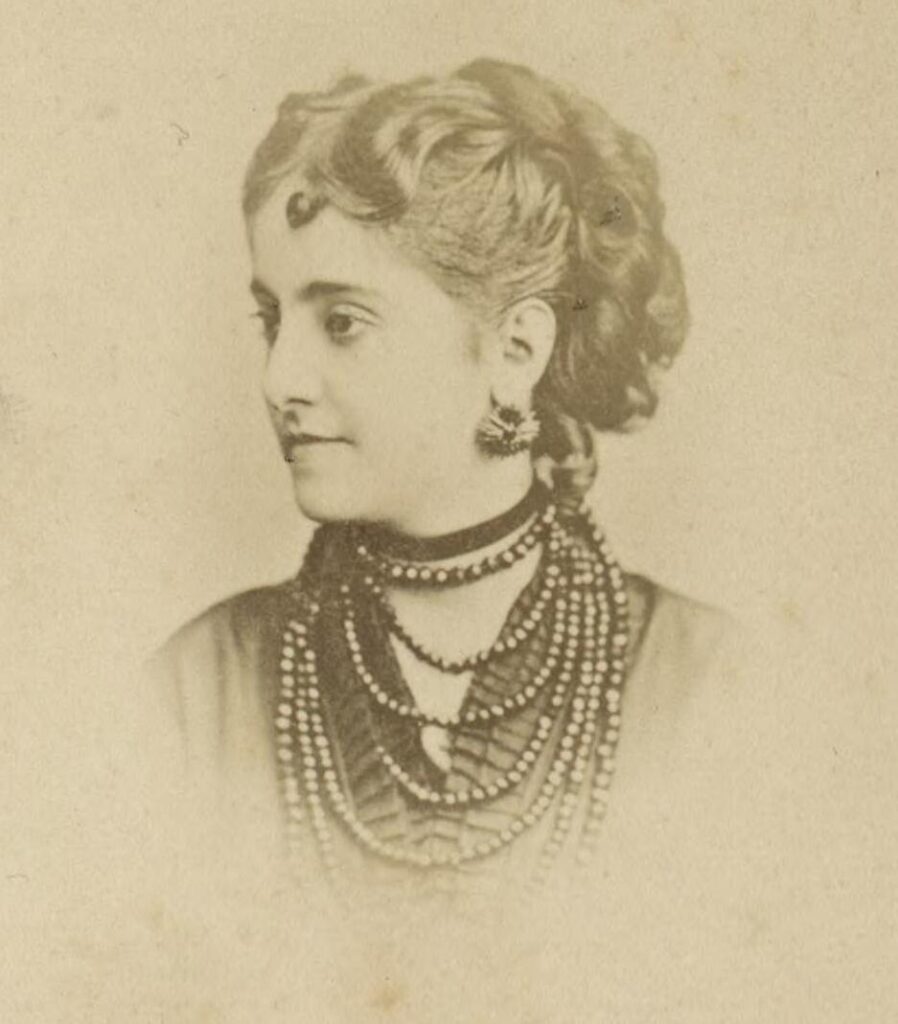
Adelina Patti (1843-1919)
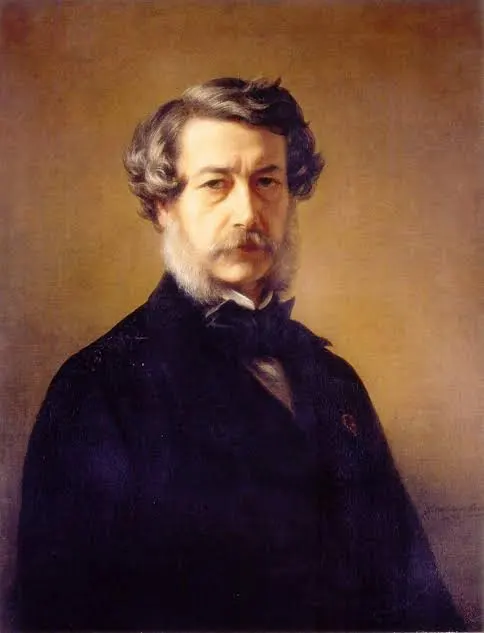
Franz Xaver Winterhalter (1805-1873)
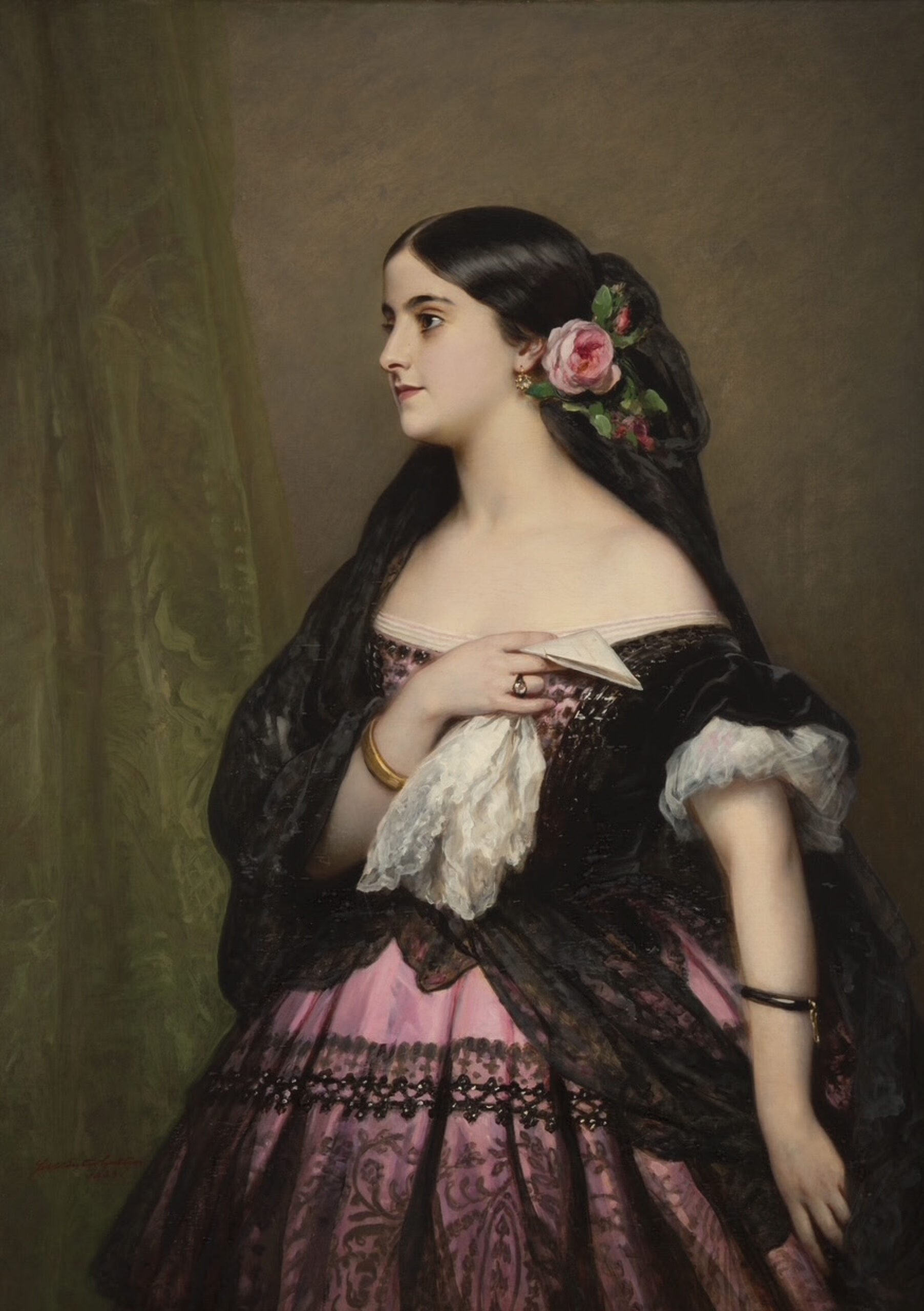
A portrait of Adelina Patti, three quarter length as Rosina in Rossini’s opera ‘Il Barbiere di Siviglia’
Signed and dated 1863, lower left
Oil on canvas
110.0 x 78.0 cms (canvas size)
Provenance:
believed to have been commissioned by Napoleon III and given to Adelina Patti (1843 – 1919);
Baron Gustaf Olof Rudolph Cederström, her third husband;
thence by family descent
In 1862 Paris was enthralled. A nineteen-year-old soprano had electrified audiences at the Théâtre Italien with her Rosina in The Barber of Seville. Emperor Napoleon III responded not merely with admiration, but with a commission.
This portrait by Franz Xaver Winterhalter was presented to Adelina Patti together with a diamond and ruby brooch – a gesture from one sovereign power to another.
Unlike the grand state portraits for which Winterhalter is renowned, this work is intimate and luminous. The creation of the Patti legend was forming – youthful yet composed, aware of her gifts and the effect they produced. It captures not simply a likeness, but the emergence of a phenomenon.
Winterhalter would paint Patti again, formally dressed in evening attire. That second portrait now resides at Harewood House, acquired by the late Earl of Harewood – grandson of King George V, Director of Covent Garden, and founder of Opera Magazine. The present work, earlier and more personal, stands apart within the artist’s oeuvre.
1805-1873
Franz Xaver Winterhalter
Winterhalter was the defining portraitist of nineteenth-century Europe. From Queen Victoria who commissioned more than 130 works from him to the courts of France, Austria, Belgium and Russia, he shaped the public image of monarchy during a period of immense political transformation.
He was sometimes dismissed in the twentieth century as merely ‘flattering’, yet this misunderstands his achievement. Winterhalter did not simply record power, he constructed its visual language. The face of Victorian England and Imperial France, as we imagine them today, is largely his creation.
At his death, Queen Victoria wrote that his loss was “terrible, quite irreparable… his works will rank with Van Dyck.” Few artists have so authoritatively defined the image of an era.
Adelina Patti
From her debut at New York’s Academy of Music in 1859, Adelina Patti became the undisputed “Queen of Song’. For over fifty years her name was synonymous with bel canto singing at its most refined.
Her fame rivalled that of monarchs. From San Francisco to St Petersburg, she commanded unprecedented fees and travelled with security to protect the jewels she wore on stage. By the 1880s she demanded $5,000 per recital, an extraordinary sum at the time and enough to buy a couple of Titians. Her career brought immense wealth, including her 17-acre château in South Wales.
Rossini so admired her portrayal of Rosina that he revised passages to suit her voice. Patti’s reign was not fleeting celebrity; it was sustained artistic dominance.
This portrait captures her at the threshold of her reign– a reign acknowledged even by the Emperor Napolean.
1843-1919
Contact
Victoria.spencer@aucklandproject.org
Viewing
Colnaghi London
Monday to Friday – 10am–6pm
Other times available by appointment.